Recycling and the circular economy
Recycling is not the solution to ending the waste crisis, but it still plays a key role in the circular economy. Recycling keeps our trash out of landfills and incinerators—and keeps materials in circulation, reducing the need to extract virgin materials from our planet.
What is a circular economy?
A circular economy is an economic system in which products are made and consumed in a way that minimizes the use of the world’s resources, reduces carbon emissions, and cuts waste, thus protecting the planet. This system keeps materials in use for as long as possible through:
- Reuse
- Repair
- Remanufacturing
- Recycling
For example, instead of buying the latest smartphone model every time a new one comes out, the focus would shift to keeping the one you have for as long as possible and repairing it when necessary.
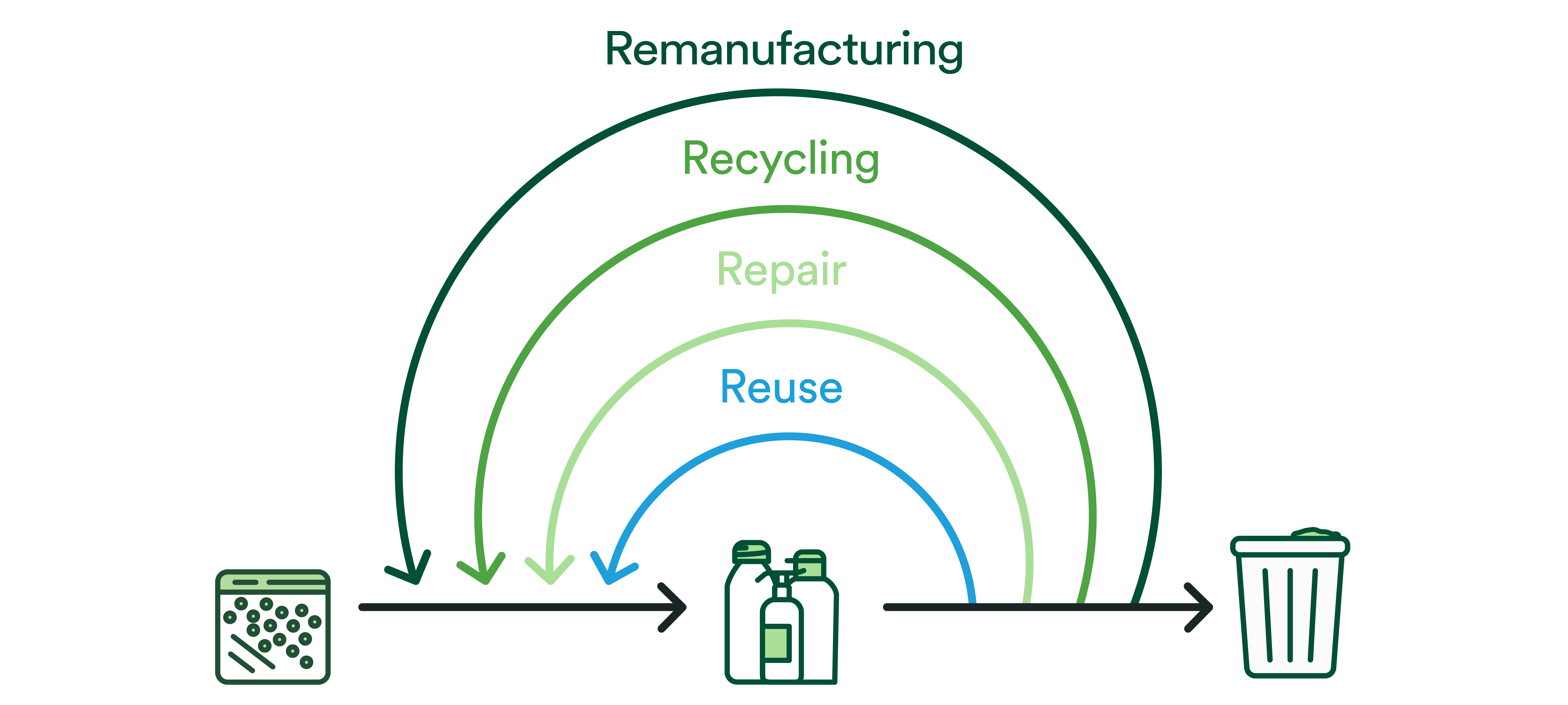
In a circular economy, production is equally as important as consumption. When products are designed to be repaired, reused, or remanufactured rather than thrown away, there’s significantly less end-of-life waste. However, responsible consumption is still important in this system. When we buy less, manufacturers produce less. When manufacturers produce less, natural resources won’t be depleted as quickly, and carbon emissions will be reduced.
Our current system: the linear economy
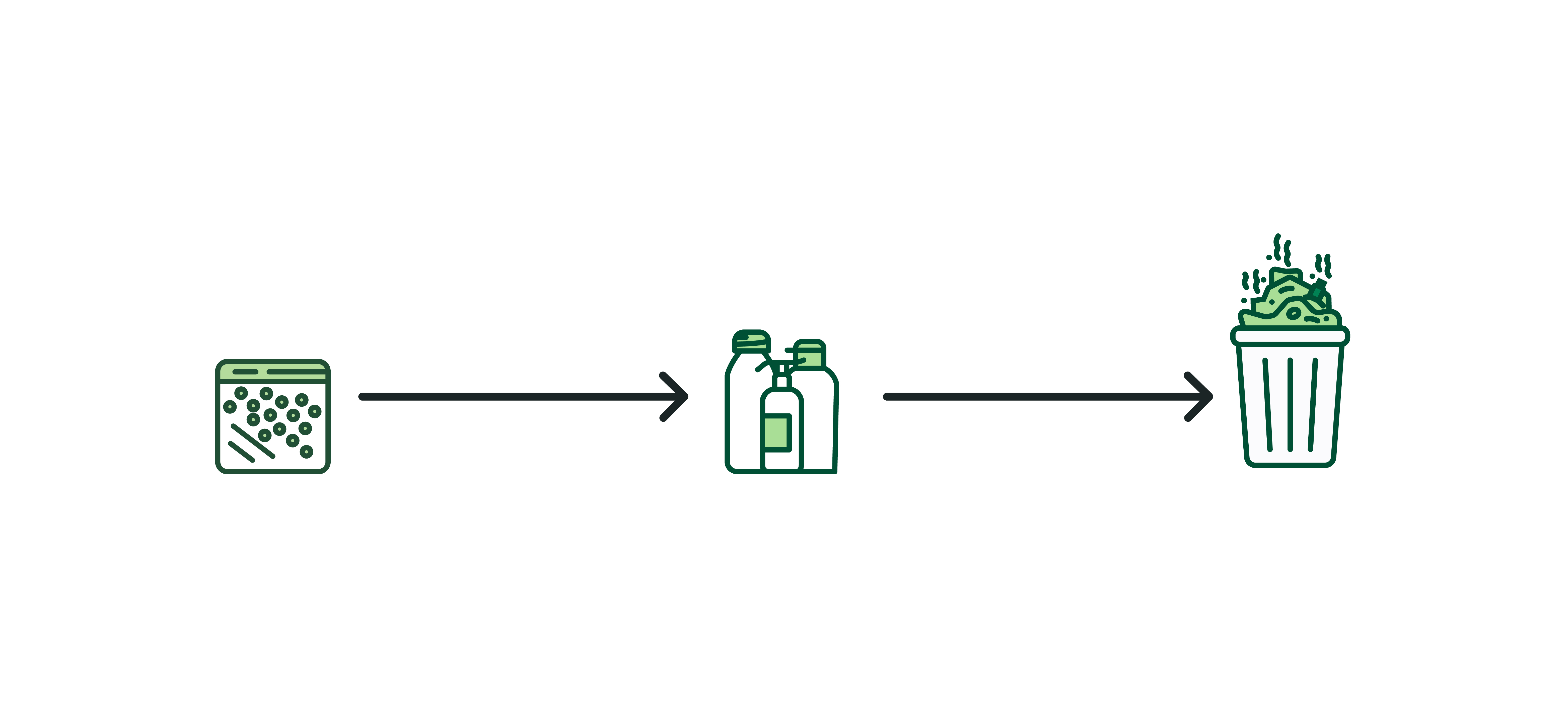
In contrast to a circular economy, we currently operate under a linear economy—sometimes referred to as the “take-make-waste” economy. We take materials from the planet, use them to create products, and then throw these products away when we no longer want them—even if they are still usable. We often throw products away before they reach their end of life. In this system, most materials become waste.
Recycling and the circular economy
In the circular economy, reuse, repair, and remanufacture are prioritized above recycling. When an item has reached the point where it can no longer be used, recycling is a much better solution than landfills or incineration. Recycling keeps materials in circulation, reducing the need to extract virgin materials from the earth. Natural resources (like oil and coal) used for the first time are considered virgin resources. Their extraction and processing use a great deal of energy and often create pollution, in addition to disrupting ecosystems and draining our natural resources. Recycling helps to put an end to the take-make-waste system.
Learn more about TerraCycle’s recycling process >
How do we move toward a circular economy?
When we all take small actions to help the planet, it makes a big difference. When possible:
- Reduce your consumption: Buy less. When we’re conscious about our purchases and buy less, less waste is created.
- Buy better: Opt for higher-quality, longer-lasting, and repairable goods or items in reusable packaging. Learn about Loop, our global reuse platform.
- Avoid landfills and incineration: Recycle everything that you can through your curbside service, and for hard-to-recycle trash, try our free recycling programs or Zero Waste Box solutions.
TerraCycle’s core purpose is to combat the global waste crisis, and we are actively working to accelerate the move to a circular economy. We’ll continue to be at the forefront of new and innovative solutions to eliminate the idea of waste.