Best Health Online April 22, 2019
These Eco-Conscious Brands Deserve Some Recognition
From sustainably-sourced ingredients to carbon neutral initiatives, these brands are helping offset their environmental impact.
Allbirds
For Allbirds, sustainability has always been top-of-mind; it’s part of the brand’s DNA. Every product from the footwear company is made out of environmentally-friendly, renewable resources, and their production process uses 60 percent less energy. Now, Allbirds has announced it’s going 100 percent carbon neutral under the Allbirds Carbon Fund. It’s a self-imposed internal carbon tax the company will use to fund emissions reduction projects. What does that mean? Going carbon neutral means that if you’re adding polluting emissions to the atmosphere, for example, you would subtract them or negate those effects by purchasing carbon offsets which are basically credits for emission reductions achieved by projects such as wind farms, solar installations, or energy efficiency retrofits. So, for Allbirds to go carbon neutral, they essentially have to make-up for any environmental impact with positive initiatives like renewable energy projects. To celebrate, the brand has released a limited-edition endangered bird shoe collection where 100 percent of the proceeds will go to the National Audubon Society, a non-profit conservation organization based in the U.S. $135; available at allbirds.caHonua Skincare
Born and raised on the Hawaiian island of O’ahu, Kapua Browning created Honua Skincare in 2015 due to increasing demand in the skincare products she was originally formulating specifically for her facial clients. Made with traditional Hawaiian botanicals like Olena oil (Hawaiian turmeric) and noni fruit, Honua celebrates the Hawaiian culture and Aloha spirit. Ingredients are sustainably sourced from Hawaiian farmers and Honua works with the community to help give back by organizing beach clean-ups and educational events. (These initiatives are paying off: Hawaii has some of the cleanest air in the world.) Plus, the unique box packaging is made using wind energy and it’s even compostable (thanks to the absence of glue and the use of a vegetable ink). Prices start at $35; available at thedetoxmarket.ca Photo Credit: Dresden
Dresden
This Australian eco-friendly eyewear brand just launched its sustainably-made glasses and sunglasses in Canada. Uniquely, the brand offers just one universally-flattering frame style, but in four sizes (from extra small to large) and hundreds of colour varations (16 standard colours and hundreds of blended colours). In order to meet their zero-waste mandate, Dresden reuses excess dye-coloured plastic waste from their eyewear moulds to create one-of-a-kind transitional frames with blended colours. (This is where the hundreds of blended colour frames come in.) Select one of these frames and you might have the only pair ever created. Prices start at $49; available at dresden.vision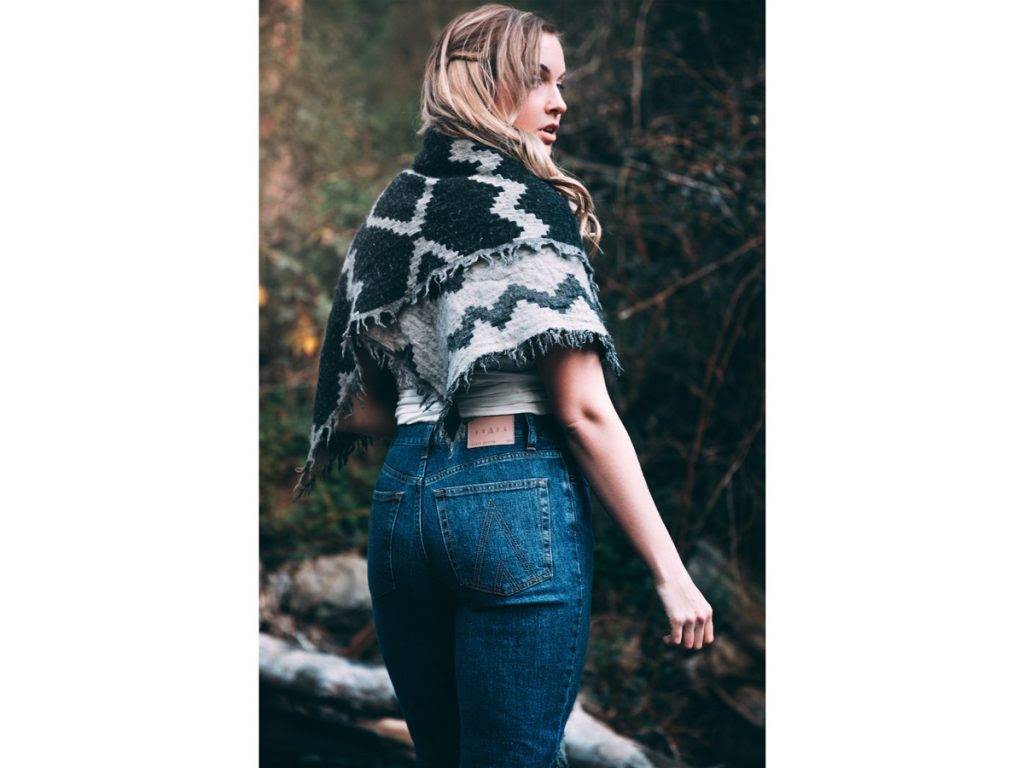 Photo Credit: ANARA
ANARA Denim
Newly launched ANARA Denim (the brand officially launched on Earth Day, April 22!) is designed in Vancouver and ethically manufactured in Melbourne, Australia. The denim is made from a fabric blend that contains over 50 percent hemp, and uses two-times less water and yields 250 percent more fiber on the same amount of land compared to cotton. $245; available at anara.co Need an excuse to shop? Here are 13 ways green living can make you healthier. Photo Credit: EVIO Beauty
EVIO Beauty
Brandi Leifso, founder of EVIO Beauty, is on a mission to create products that are good for your skin, good for the planet, and good for the community. In addition to producing beautiful, highly-effective products that are vegan, cruelty-free, gluten-free and free of parabens, EVIO Beauty uses hemp-based packaging materials in order to cut down on their use of plastic. Up next? A cannabis skincare line in partnership with Aurora Cannabis. Prices for EVIO Beauty start at $18; available at eviobeauty.com Photo Credit: Encircled
Encircled
Sustainability and versatility are two values at the heart of Encircled, a Canadian company making eco-friendly clothing. With a tag-line of “Be more with less,” Encircled is an antidote to fast-fashion, creating high-quality, versatile items that belong in every capsule wardrobe. Their best-selling Chrysalis Cardi can be styled more than eight different ways. You can even wear it as a infinity scarf or a one-shoulder dress! $138; available at encircled.ca Photo Credit: KLIIN
KLIIN
One KLIIN towel can potentially replace seventeen rolls of paper towel, according to this Canadian company. The reusable towel is made of 100 percent natural fibres and can be used for everything from wiping counters and doing the dishes to scrubbing the bathroom and washing the car. One towel will last up to three hundred washes after which it can be tossed into the composter. Yep, it biodegrades into organic matter within four weeks. Available in two sizes, with prices starting at $5; kliin.co. Photo Credit: Weleda