What makes some trash unrecyclable?
Trash can be considered “unrecyclable”—aka, not typically accepted by curbside recycling services—for a number of reasons. But just because something may be considered unrecyclable doesn’t mean there’s no way to recycle it.
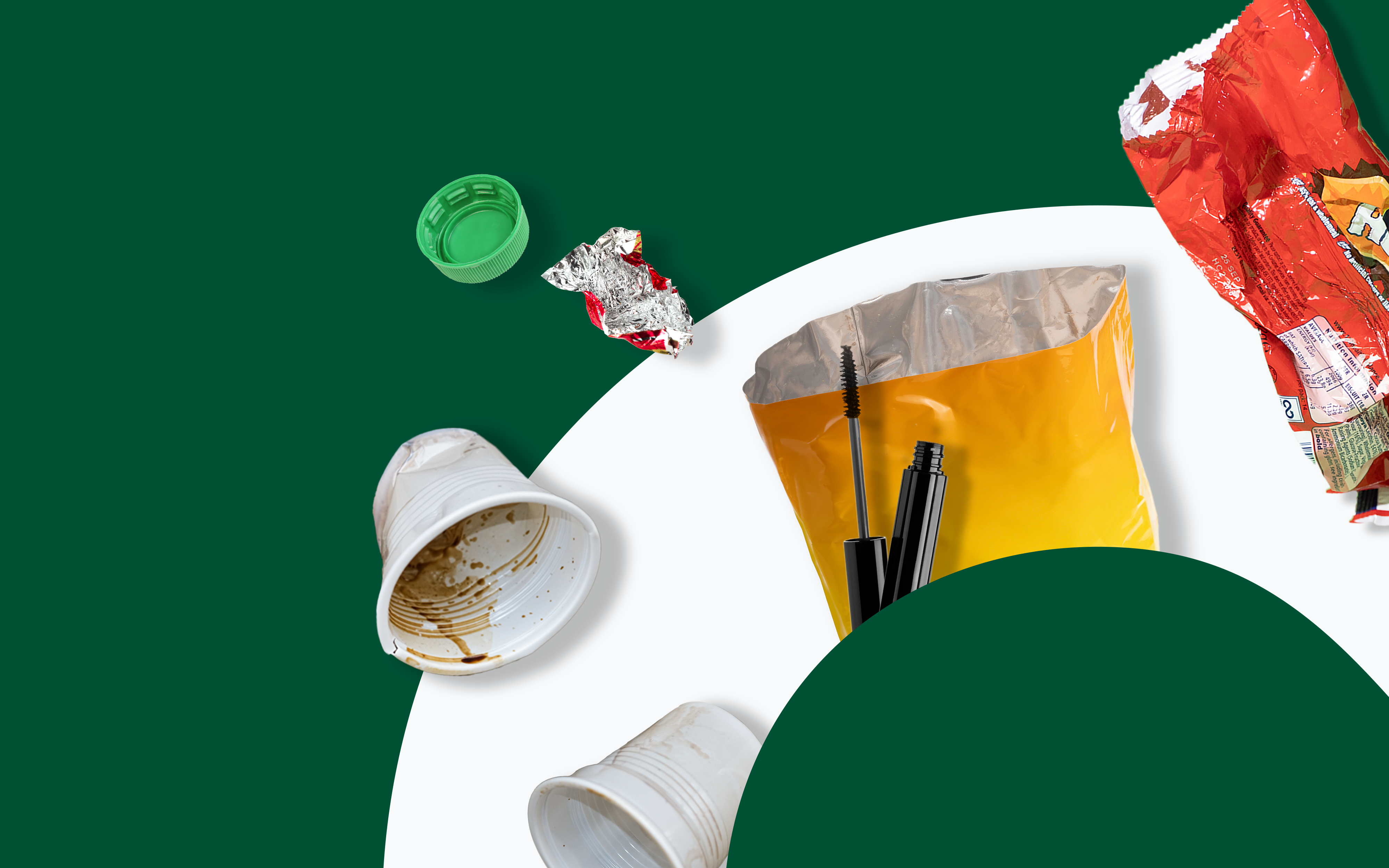
What makes some trash hard to recycle?
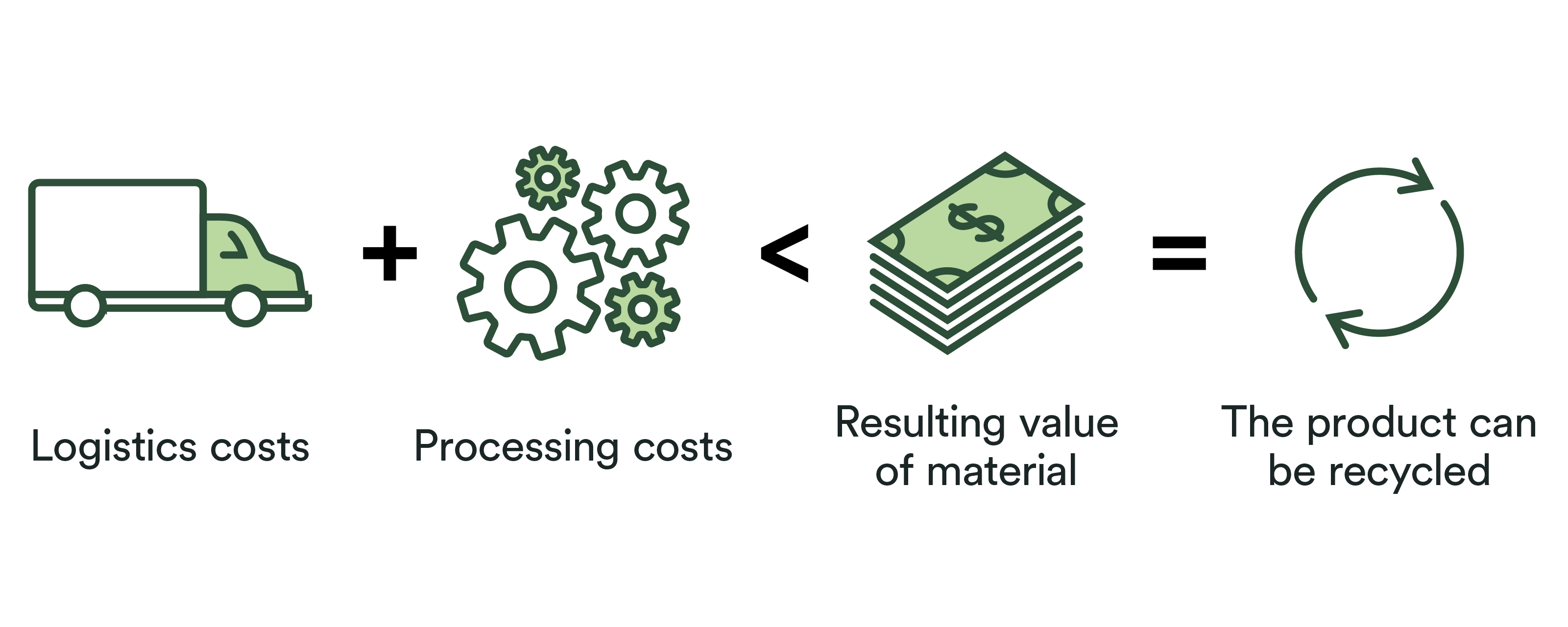
Factors like contamination, the size of an item, and a mix of material types in an item can all affect the recycling process, often adding extra labor and expenses. When it comes down to it, the economics of recycling hard-to-recycle trash is what determines if it will or won’t be recycled by a waste management company.
The economics of recycling
Like any other service, recycling takes time and money. The cost of the recycling process includes collecting, transporting, handling, and storing the trash and then sorting, cleaning, and processing it into raw material.
Because they are businesses, the goal of waste management companies is to make a profit. It is easier for them to make a profit by recycling materials like glass, cardboard, aluminum, and plastics #1 and #2. These materials are less complex to recycle, and the resulting material is worth more than the cost of recycling. However, when it comes to hard-to-recycle trash like beauty empties, coffee capsules, and cigarette butts, it becomes much harder to make a profit. That’s why many curbside recycling services don’t accept them.
How does TerraCycle recycle the unrecyclable?
At TerraCycle, we can recycle your hard-to-recycle items that typically aren’t accepted by curbside recycling services because we work with brands, retailers, and other stakeholders who fund the process.
For example, our free recycling programs are free to you because brands fund the recycling of their products through TerraCycle, whereas the cost you pay for one of our Zero Waste Boxes funds the recycling of all the complex trash in your box!
Innovating recycling solutions for all
To help more people recycle more waste, we offer a variety of recycling solutions for dozens of types of hard-to-recycle trash. We have solutions for individuals, households, businesses, municipalities, and more. Plus, mail-in programs, public drop-off points, and in-store drop-off locations make it more accessible to recycle hard-to-recycle trash.
- Free recycling programs: Recycle hard-to-recycle trash from your favorite brands at no cost to you.
- Zero Waste Boxes, Pouches, and Pallets: #RecycleEverything with Zero Waste Boxes, Pouches, and Pallets for any quantity of even your most complex trash.
- Industry-specific recycling: Find recycling solutions tailored to your industry, like SalonCycle, VetCycle, OfficeCycle, and ScienceCycle.
- TerraCycle Commercial Recycling: Recycle large and small volumes of hard-to-recycle materials—such as mixed plastics, PPE, and obsolete inventory from your manufacturing or production facility, distribution center, or warehouse.